Casa Pescara
Parquet · 3 min
Wood flooring in a piano room in Pescara
An imagined household plans flooring, protection and a piano move in an occupied home.
The piano makes this more than a choice of samples
Illustrative scenario, not a completed project.
A family in a Pescara flat wants a new floor in the room holding an upright piano. The project looks straightforward until the fitter asks where the instrument will go during work. The hallway is clear only when two doors are fully open. There is also a weekly lesson in the room and the family would like to avoid a second move. The first quote has one general item for clearing the space. Before accepting, they separate three questions: how the instrument will travel, where it can wait and when the new parquet can take it. Each answer belongs to a different person and depends on conditions they need to check.
The mover needs the real dimensions
The family gives the mover the piano dimensions and a plan of the route. They ask for access, turns and changes in floor height to be checked without attempting to move the piano themselves. The survey identifies an alternative: use the next room while keeping clear of the point where the new floor meets the hall. Storage farther away would give the fitter more room but involve more travel and coordination. They compare both routes for floor protection, access and door clearances. The mover explains which places have to stay clear and where protection should be agreed with the flooring installer before the instrument comes through.
The flooring installer checks where the load will sit
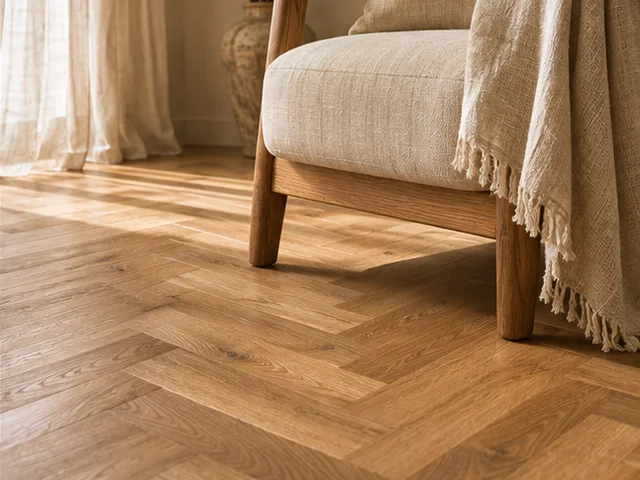
The drawing shows the final piano position and its points of contact. The family asks the installer to consider substrate, fitting method and conditions for the load using the product data. They also check which pads or supports are compatible with the finish. The room has a rug and a stool that moves frequently, so care instructions are discussed before ordering. A pale sample makes the board pattern visible, while a darker one works with the piano. They settle the suitability of the system and protection before choosing between colours. The quote then distinguishes preparation and transitions from the conditions for putting the piano back.
One date depends on several checks
The household works back from the first lesson they hope to hold in the room. They ask when the flooring can be inspected and when the manufacturer permits a load of that kind. The move is booked once those conditions and the person confirming them are clear. The schedule includes doors, threshold and skirting because a piece installed too early could restrict the route. The temporary room is chosen after checking that nobody needs to carry bulky objects through it. In the scenario, they move one lesson to leave time for the checks. The schedule keeps the instrument from arriving while the floor or approach remains unavailable.
They assess the result when the room is back in use
The imagined plan puts the piano back in its original position and renews the floor with a system assessed for the room. Before the instrument returns, the people responsible check conditions for use and the agreed protection. The family then tests ordinary movements: reaching the keyboard, moving the stool and opening the door with the rug in place. They record the flooring and protection references and mark the support positions. The expected benefit is fewer unplanned moves and a named person for each check. If the instrument is changed or moved again, the file gives them a starting point for reviewing the route and flooring against the new dimensions.
Pescara · Distance and local guide coverage ↗
How we prepare the guides: sources and illustrative scenarios