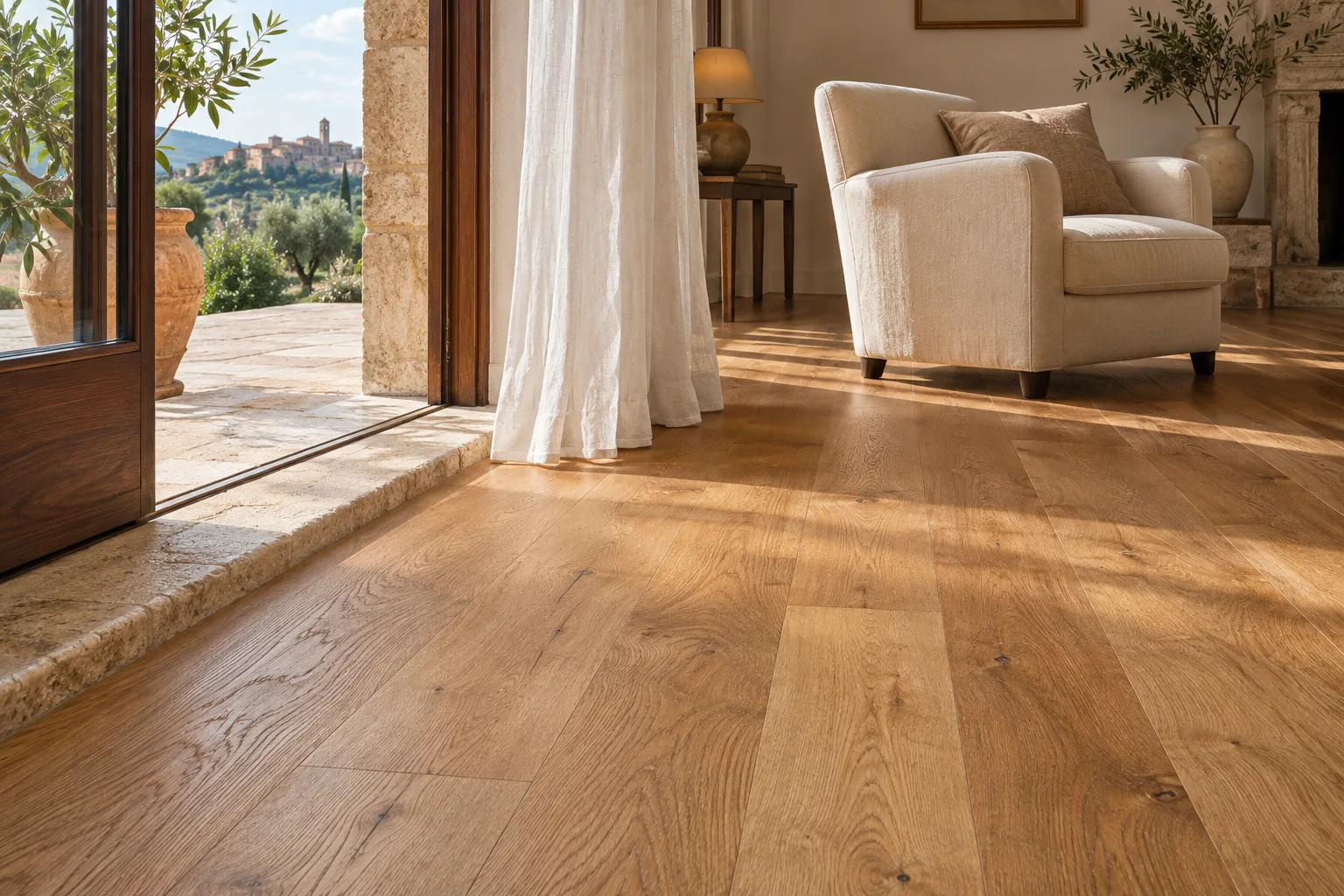
Casa Pescara
Parquet · 3 min
Solid and engineered parquet in Pescara: what to compare
Read construction and finish separately, then check fitting, wear layer and repair options.
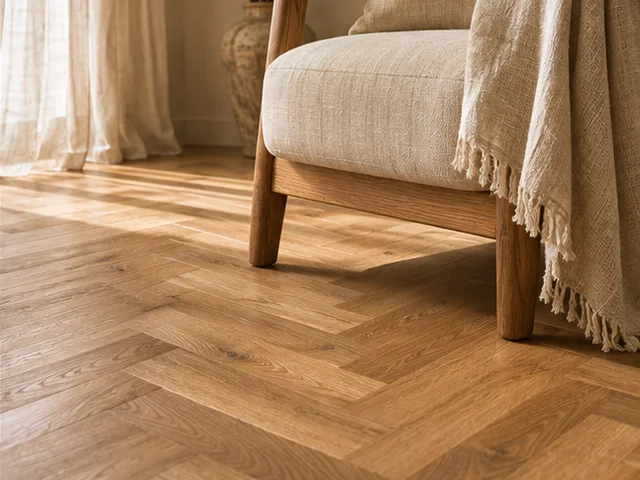
Understand what the names describe
A solid board is made from a piece of solid wood. Engineered parquet combines a timber surface layer with other layers that form the supporting structure. Prefinished describes a product whose surface finish has already been applied. It refers to the surface treatment, while solid and engineered describe how the board is made. These words can appear together in a product description. Read the product sheet, look at the edge of a sample and make a note of exactly what you are comparing. Record the species, dimensions, surface finish, joint profile and permitted installation methods. Those details will make it easier to compare a second offer later.
Look at the edge and then the room
The total thickness of the board contributes to the floor height. Its potential for future refinishing depends on construction and how much wood can be worked without damaging the joints or supporting layers. Ask what the manufacturer allows for local repairs and more extensive work. Compare surfaces under the same light and with a similar visual grade. Knots, grain and tone can vary more across a complete floor than they do on a small swatch. Ask to see a display made from several pieces, particularly if the sample in front of you is short or represents just one unusually even section of wood.
Consider the room and the subfloor
Describe the room and how you will use it. Mention large windows, the condition of the substrate and any underfloor heating. Compatibility and installation depend on the real site conditions and the product instructions. Engineered flooring uses several layers, and products of different sizes and constructions can behave differently. With solid timber, the species, board width and indoor conditions also inform the installation. In a Pescara flat, ask the fitter to review where the wood meets tiles, thresholds and existing doors. If you choose flooring before those heights are known, keep alternatives with suitable thicknesses in mind until the survey can confirm what will fit.
Plan the stages before you use the room
Factory-finished boards come with the surface treatment already applied. For timber finished on site, ask about sanding, application and when the selected finish can be walked on or covered. Find out how dust, ventilation and neighbouring rooms will be managed during the work. If you pick a finish from a sample, check that the sample uses the same timber species and surface preparation. Compare what it will take to maintain the finishes, from approved cleaners to touching up a small mark and any periodic treatment. Instructions written for the specific finish are more useful than a general rule for all wood flooring.
Check how the quote identifies the product
The written offer should let you match the quoted flooring with the boards and finish you looked at. Check the product reference, board size, visual grade, finish and installation method. See whether subfloor preparation, skirting, thresholds and post-installation protection are listed separately. Ask what needs to be measured before the board format is confirmed. When part of the finish will be applied on site, find out who takes care of each stage and when the room can be used again. Finally, ask whether leftover boards are worth keeping and how to store them. Keep their original identification so they can be matched if a deep mark, joint or damaged patch needs attention.