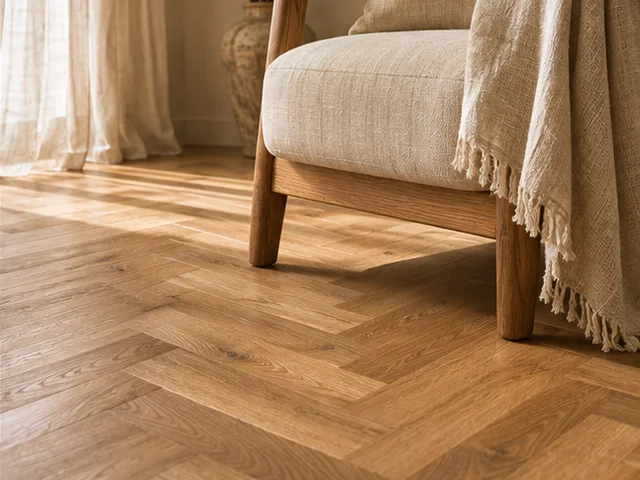
Casa Pescara
Parquet · 3 min
Parquet and natural light: choosing a finish in Pescara
Compare several boards in the room and see how light, furniture and shading affect the finish.
Map the light through the day
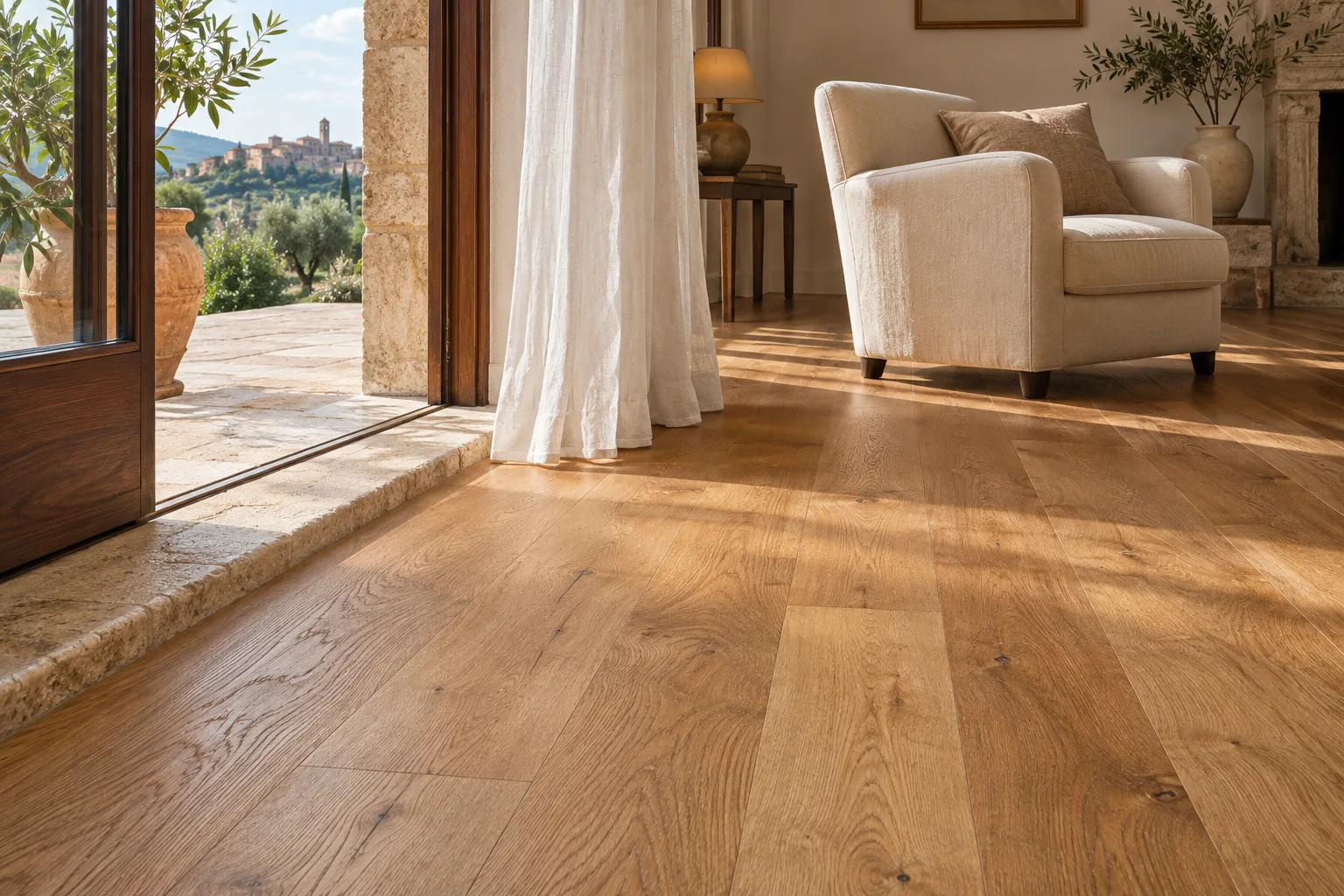
Assess the wood at the times you use the room. Note which window brings direct light, where it stays diffuse and which parts remain in shade. Glazing onto a balcony might light only one strip in the morning while an opposite wall reflects different light in the afternoon. In a home in Pescara, you can photograph the same place at different times and record the position of blinds, shutters and sun. Add the places you usually look from. A choice made at the door can be different from one made beside the window, especially if the surface picks up a reflection.
Lay out several boards in the proposed direction
A single sample held in your hand shows colour and finish close up. Put several boards or an assembled panel on the floor to see the grain, knots, edges and variation together. Turn the sample in relation to the window. Shadows around the joints and the visibility of the grain can change depending on whether light falls along or across the boards. Add skirting and a card in the wall colour. Look at the floor while sitting and standing, using the actual materials to judge colour. Record the position and time of each trial so you can repeat it with another visual grade or finish.
Separate sheen, texture and natural variation
Look at reflections in a bright area and a darker one. A brushed surface can show its texture under angled light, while a smoother surface can emphasise other features of the wood. Ask to compare two treatments on the same species and similar visual grade. It will help you see what comes from the treatment and what comes from the wood itself. If a sample has been on display a long time, check whether it represents current production and ask to see a newer board if possible. Appearance can vary between pieces and over time. Ask which variations are natural and which features are specifications of the finish.
Consider how exposure changes once you move in
Mark the places covered by rugs, low furniture and seating. Exposure to light can affect the tone of timber, and areas that stay covered can change at a different rate. Ask what the supplier says for your species and finish. Think about when you open shutters and blinds and which areas receive sunlight for longer periods. Consider shading options that suit the room and your everyday comfort. For rugs, read the instructions on materials, backing and timing after fitting. Look at the light again when furniture is in place. A cleared room exposes more of the surface and can make the finish look different from the way it does in normal use.
Keep a reference for the approved sample
Photograph the approved boards with the labels visible and record the orientation, position and room conditions. If the layout includes a change of direction or a border, try the sample in that position too. Use the sample to confirm the product and finish codes before ordering and review the boards under good light as they are installed. Keep the care instructions and a labelled piece if one is available. If you move a rug in future and find a colour difference, you can describe where it appeared and how that spot was exposed. This gives a supplier or flooring fitter a specific place to start if you ask them to examine it.
How we prepare the guides: sources and illustrative scenarios