Casa Pescara
Painting · 3 min
How to test wall paint colours before painting in Pescara
Compare dry samples in several locations and use the surfaces that will stay in the room as a reference for colour.
Choose three samples that answer a question
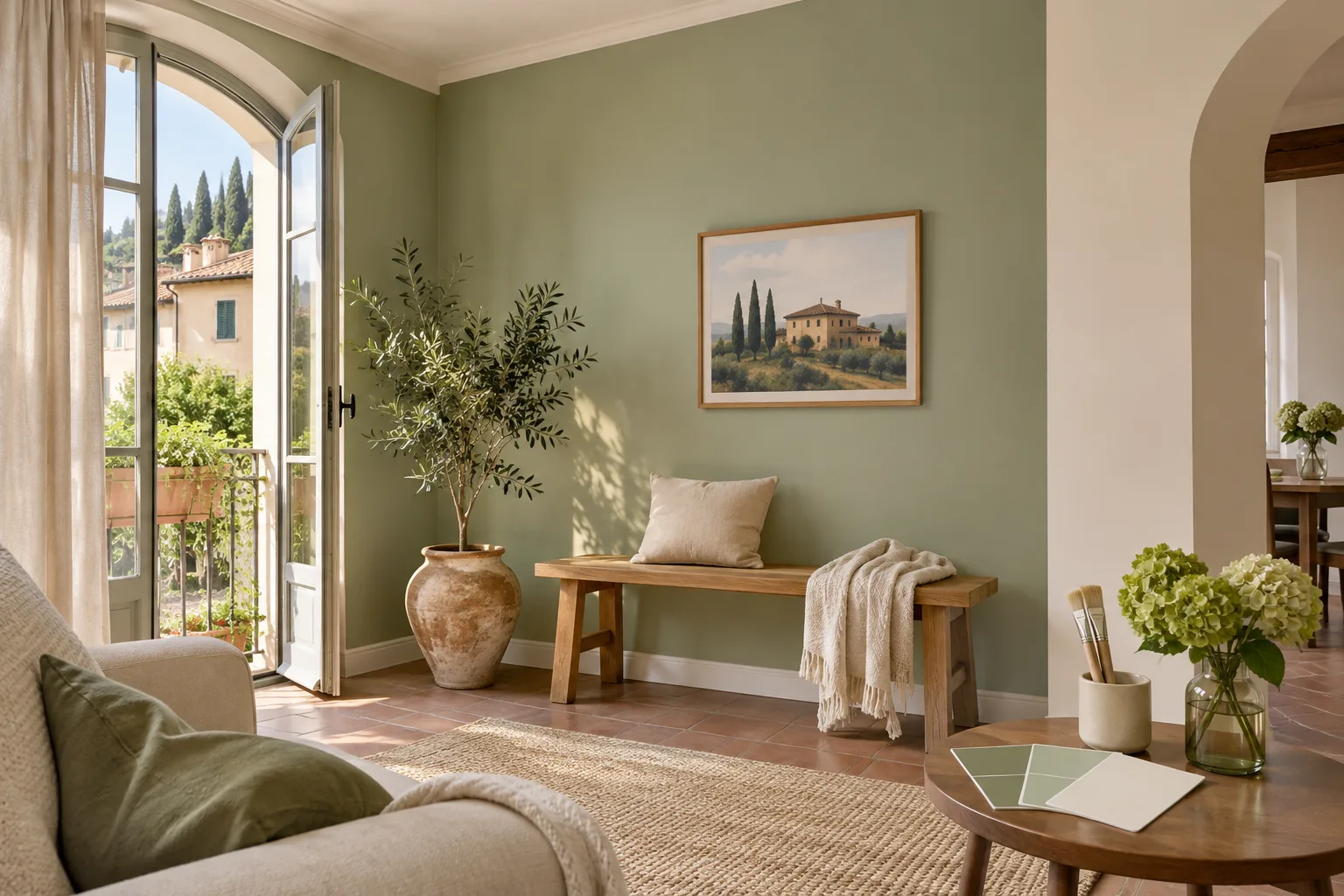
Test samples in the room, check them at different hours, and compare them with flooring, furniture, and artificial light before committing to a colour. Before reaching for colour cards, decide what relationship you want between the wall and existing surfaces. You might want a warm background for pale timber flooring or a more muted colour beside a prominent sofa. Limit the first round to a few options with a clear difference between them, such as strength or undertone.
Record the code and finish of every sample. A colour identified only by its marketing name can be hard to find again if you have photographs of several charts. The code also helps you ask whether the sample paint corresponds to the formulation and finish of the product you would ultimately use.
Put the same colour in several places
Test colours on stiff sample boards or on agreed patches of wall. You can move the boards around easily, while a wall patch can show the effect of the existing substrate and texture. Ask how to prepare the sample surface to get a useful result, especially if the wall is already a strong colour.
Place the sample near the window and then in the area farthest from daylight. Leave some visual space around it. Two colours pressed edge to edge can emphasize differences that feel less important when you look at one colour on its own in the corner where it will be used.
Look at the paint at useful times
Look at the dry sample in the morning, in the afternoon, and with the lamps on. In a flat in Pescara, light reflected from the neighbouring building or filtered through a curtain can change daylight substantially. If you mainly use the room in the evening, pay particular attention to how it looks with your normal lamp.
Take a brief note during each test. Writing “more pink next to the timber after dinner” tells you where and when you saw the effect. Phone photographs can help you remember the position and comparison, though the screen may display a different colour from the one you saw in the room.
Compare the surfaces that will stay
Bring the sample close to the skirting, door, curtain fabric, and floor. Try it with the materials touching, then take a few steps back. A contrast that looks appealing at close range can become barely noticeable across the room or attract more attention than you intended.
If you will also change the floor or a major piece of furniture, get a sample before confirming the wall colour. In an open kitchen, try the colour beside a cabinet door and worktop, then view it from the adjoining space. Your most useful viewpoint may be the table or the entrance.
Confirm the colour for each surface
Once you have chosen, make one line for each wall, ceiling, or feature to paint. Add the code, agreed product, finish, and location. If a colour needs to continue around a corner or stop before an arch, mark the boundary on a photograph.
Keep the dry sample as a reference and ask when you can check the first application before it is extended. Also check whether any changes to lamps are planned soon. Sharing those details gives you a concrete basis for discussing the finish you actually approved.