Casa Pescara
Kitchen · 3 min
Replacing kitchen cabinet doors in Pescara: what to check
Assess cabinet bodies, drilling, hinges and finishes to see whether you can keep the units and replace their fronts.

Inspect the cabinets before choosing a colour
Empty a few base units and look at the floor, sides and back panels under a good light. Check for swelling, water marks, loose screws and lifting edges. Near the sink, inspect the places where connections enter the unit and show any marks to the person assessing the work. Have cabinet stability and fixings checked, particularly for wall units and bases supporting the worktop. Sound units may be worth refinishing, while damage could require a replacement cabinet or investigation before new doors go on. Bring photographs of the open cupboards so the first quote can distinguish the units you might keep from those that need a closer look.
Measure doors and hinges individually
Record each door’s height, width, thickness, opening direction and hole positions measured from the edges. Note any hinge reference you can read. A run that looks uniform may contain slightly different doors near tall units, end panels or the dishwasher. A new front can change weight and projection, so ask which hinges and fixings suit it. If you intend to reuse handles, measure between the screw holes and check the new material and thickness. Number the parts to match the kitchen drawing. For a corner unit or an integrated appliance front, ask for a separate confirmation before ordering the whole set.
Compare refinishing, new fronts and local repairs
To renew existing surfaces, have the finish and condition identified. Timber, laminate and wrapped panels can need different preparation. Ask what tests would establish whether the new finish will adhere and whether the work includes edges, backs and visible sides. New fronts can give you a different material and may need new hinges or work on panels that stay. A local repair can make sense when few pieces are damaged and you can match the finish. For an occupied Pescara flat, explain whether you need to keep using the kitchen. Ask where dismantling, finishing, drying and refitting will take place and when you can use the cabinets.
Try the proposal on a representative cabinet
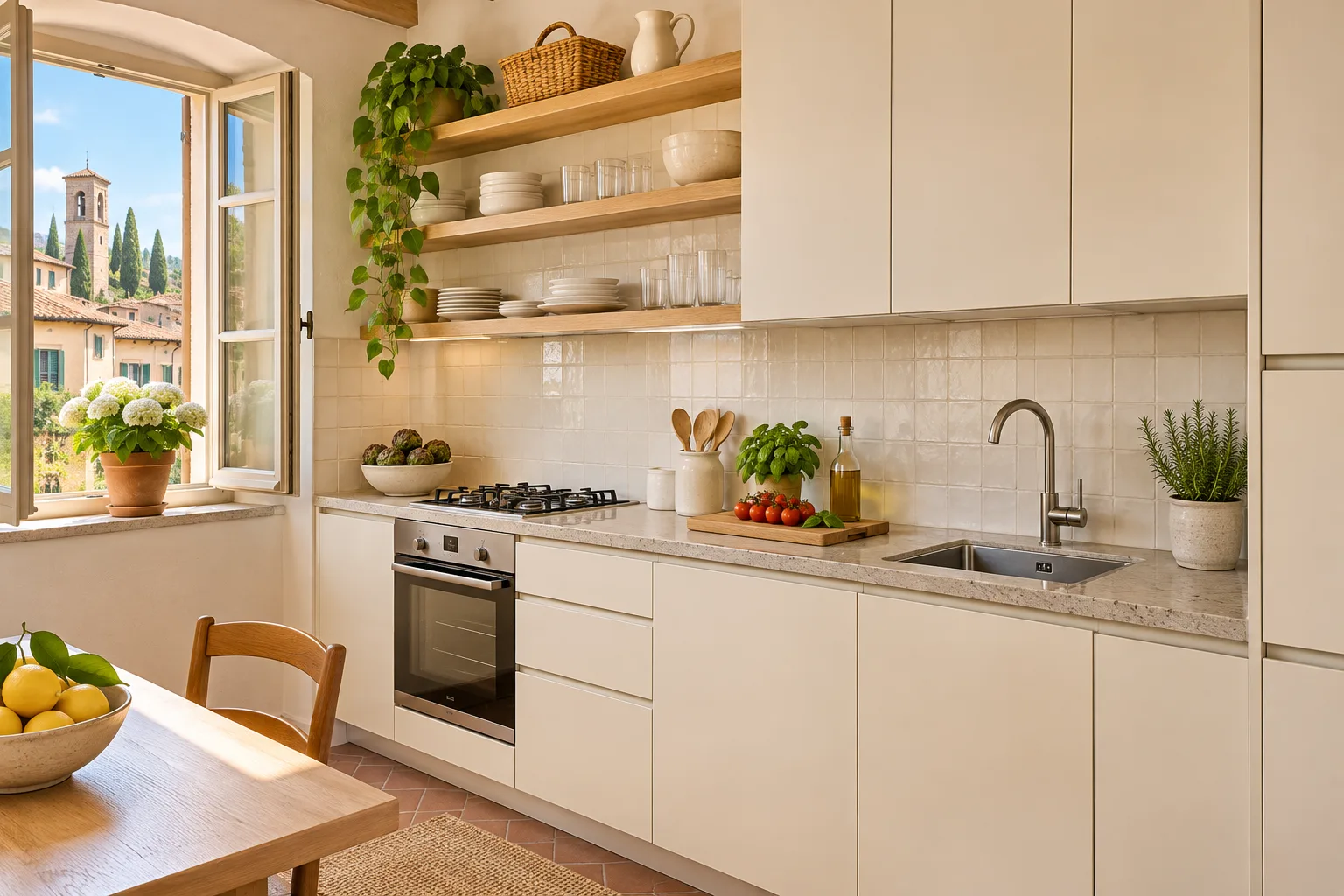
Pick a door near a light source and hold it next to an end panel, worktop and plinth. If only the fronts change, those elements still affect the result. Check the exposed edge with the door open and how the new handle lines up with its neighbours. Test closing near drawers, the oven and the dishwasher. If you are moving a handle, try the movement and make sure it is easy to grasp without catching another fitting. Ask how the new fronts will be protected and cleaned during the work. A trial can reveal a colour or alignment issue before the same change is applied to every unit.
Ask for a quote with clear inclusions
Look for a list of the doors, sides and trims covered, along with runners, hinges and handles. Check whether removal, making good, finishing and disposal of the old parts are included. For an integrated front, ask who confirms that the door opens and attaches according to the appliance instructions. If a damaged unit needs replacement, agree how the extra work will be assessed. At handover, work through the kitchen by opening neighbouring fronts and looking at the alignment of the gaps. Keep the finish and hardware references. If a drawer or hinge needs adjustment later, you can identify the actual fitting before you look for a replacement.
How we prepare the guides: sources and illustrative scenarios