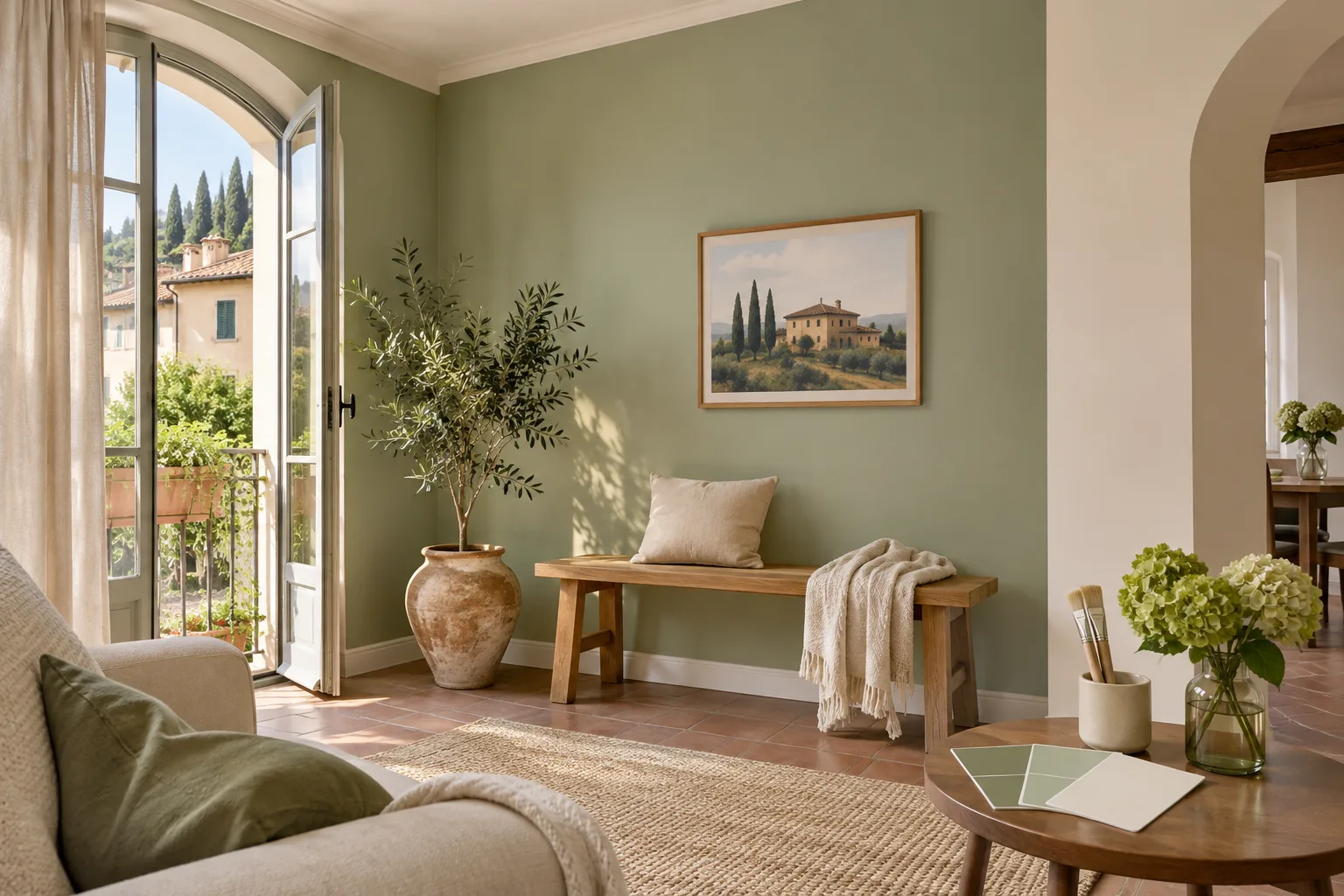
Casa Pescara
Painting · 3 min
Painting a living room in a Pescara home
Assess the walls from the sofa and adjoining rooms, then plan painting around the furniture and surfaces you intend to keep.
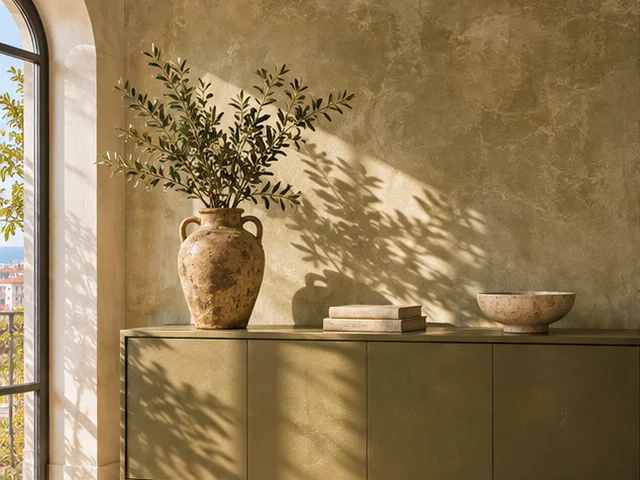
Choose the viewpoints that matter
Start at the entrance, then sit on the sofa and look back from the dining table. Each position brings a different wall, window or piece of furniture into view. For a Pescara apartment with an open kitchen, include the cabinet and worktop finishes that appear alongside the living room. Mark the walls that sit behind the television, bookcase and table. A sample you like against a blank wall can read differently beside a screen or a strongly coloured curtain. If the room opens to a balcony, check the sample with the door closed and with the shading you normally use. Photograph the two views you care about most. They give you a concrete reference when deciding where to stop a colour or carry it into an adjoining room.
Put the sample beside furniture and existing light
Compare the sample to the sofa fabric, the floor and the bookcase. Notice whether the colour changes the way you see any of those materials. Repeat the test after dark with the main light, then use the lamps that are on when you read or watch television. If you want a feature wall, mark the intended edge on a suitable surface with removable tape. Check the line from the adjoining room. A break that feels clear when you stand beside it can vanish from the usual view. It can also emphasise a corner you would prefer to keep quiet. Decide whether the paint is meant to define one activity or make the whole room feel connected. Use your two main viewpoints to judge that decision.
Plan around things that are hard to move
List what can be removed before painting and what needs a plan, such as a wall-mounted television or a large bookcase full of books. Photograph any cable arrangement you need to restore and label the small parts you take off. Ask the decorator which surfaces need to be reached behind furniture and how the flooring, sofa and curtains will be protected. Decide which picture fixings should remain. If the room is also the route to the kitchen, agree when it can be crossed. Find a place to put any bulky piece temporarily before you start moving it. A practical furniture plan can change the order in which the room is painted and help the decorator reach every area included in the quote.
Check the paint boundaries before putting furniture back
Make sure the estimate identifies the ceiling, recesses, window edges and any wall that will only be accessible after furniture moves. Agree who takes down and refits a screen if the wall behind it is included. At handover, review the room from the same places you used to assess the samples. Check the surfaces that will disappear behind furniture while you can still see them. Look at each colour break under the lighting it will normally receive. If a detail needs attention, give the decorator the wall, location and light conditions that show it. Record the exact paint used on each surface. If you change a large piece of furniture later, you can compare the new piece with the wall finish that is actually there.
How we prepare the guides: sources and illustrative scenarios