Casa Pescara
Painting · 3 min
Painting a room for video calls in Montesilvano
In an imagined room, daylight, camera exposure and evening use change the first choice of paint.
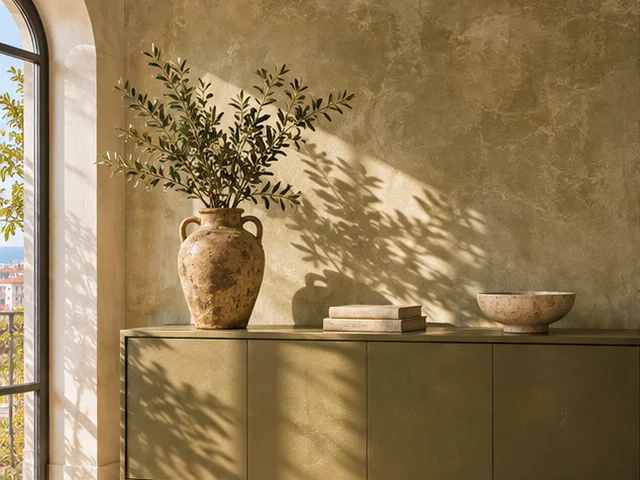
The colour changes when the window enters the frame
Illustrative scenario, not a completed project.
A couple use the smallest room in their Montesilvano home as an office and spare bedroom. During meetings, the window throws strong light onto one side and the camera makes the wall behind them appear much brighter than it looks in the room. They first select a warm white to match the wardrobe. In daylight it looks pleasant from the doorway. On screen, the difference between the face and background distracts and the pale edge seems to disappear. The couple save pictures of the same view in the morning and afternoon. They tell the decorator what happens in the room before describing the colour they first hoped to use.
The room has to work outside the camera frame
Moving the desk to the opposite wall would improve light on the face. It would also put the screen near the route between bed and door and leave less room to open a drawer. One person suggests a darker wall behind the chair. The other worries that the room will feel closed in when the guest bed is open. On a plan, they mark the chair, camera view, door swing and open bed. They try two positions without moving sockets and find that a small turn of the desk clears a reflection while keeping the route open. The decisions left are what to do with the wall in the camera view and the one receiving the strongest daylight.
The samples compare colour and finish together
Instead of judging the samples under one lamp, they put two paint colours and another finish on separate sample boards beside the desk. They ask the decorator how the test can represent the existing wall, which includes a previously filled patch. They look at the samples with the bedcover and cabinet, with the window shaded and with the evening lamp on. A slightly deeper colour appears more consistent on camera. They still need to consider how it will look on a whole wall. They agree exactly where the finish will go and ask where it stops at the door frames and wardrobe. The agreed area is the part of the room they can evaluate from both positions.
Work is scheduled for days the room can be out of use
The couple set aside a period when neither needs the room for meetings. They move the computer, microphone and fabrics and give the decorator access to the walls. Before work, they ask how the old filled areas will be assessed and what preparation is needed for an even finish. The decorator reviews the substrate and explains when accessories can go back. They note any plates and trim that need coordination. The sample helps choose the colour while preparation makes the finish more comparable across different parts of the wall. In the imagined project, the walls by the bed stay pale and the new colour is limited to the desk side.
They judge the decision at two different times
The couple plan two checks. In the first, they repeat a call at the time the issue first appeared. They check that the desk works, the background is clear and the face is visible with the lights normally in use. In the second, they open the bed and use the room as a bedroom. The colour needs to work with the wardrobe shut and the bedside lamp on. They keep a photograph of the test and the paint reference, using the picture as a record of conditions. The result in this scenario depends on the relationship between window, camera, wall finish and the second use of the room. It gives them a choice they can check in both settings.
Montesilvano · Distance and local guide coverage ↗
How we prepare the guides: sources and illustrative scenarios