Casa Pescara
Painting · 3 min
Painting after wallpaper removal in a Spoltore home
An imagined room compares samples and preparation when old wallpaper covers only part of the wall.
One wall contains two different surfaces
Illustrative scenario, not a completed project.
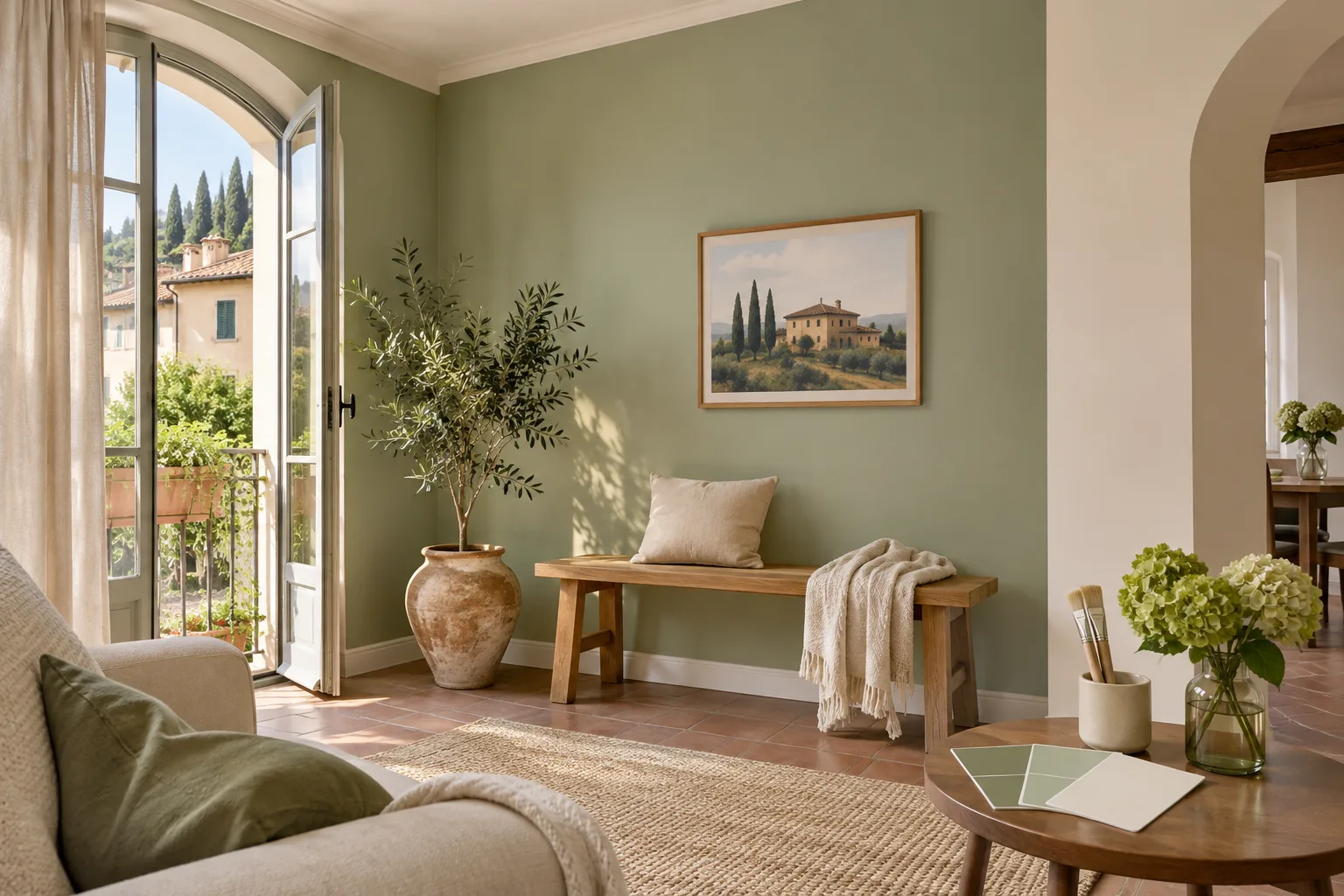
In a Spoltore home, wallpaper sits behind the sofa and pale paint covers the sides of the living-room wall. Two adults want a single colour and initially plan to choose a shade. At the wallpaper edge they see a small lifting section and an old repair beside the door frame. They ask the decorator to assess the wall before removing anything and explain when the wallpaper was added. They share an older photograph taken when the sofa was elsewhere and the wall looked different. The picture cannot identify the substrate, but suggests that sections had different finishes before the wallpaper. They mark those areas separately on the work sheet.
The paint sample follows a substrate assessment
The decorator explains that a colour sample and substrate assessment answer different questions. One shows how the colour reads in the room. The other establishes what the wall needs before painting. They ask which checks will follow removal and how any residue, holes or changes in the surface will be recorded. The quote includes a point to review the substrate before the final finish. Near the window, light emphasises changes in surface texture. Behind the sofa, evening lamps affect the colour more. They put samples in both areas and agree that a trial on the prepared wall will be useful once its condition is known.
A continuous finish still needs decisions at the edges
They weigh two options. The first keeps the idea of a band and uses a different paint colour where the wallpaper was. The second uses one tone across the wall with careful preparation where the surfaces meet. A band would emphasise the sofa position and be less adaptable if the furniture moves. A continuous colour allows more flexibility and requires a check that the prepared areas read together. They view both from the door, from the side and after dark. The decorator shows where the finish would stop at the ceiling and frames. They mark places that will be hidden behind furniture so they can inspect them before everything goes back.
One decision stays open until the wall is exposed
They still need the living room during part of the week. They agree where to put furniture and ask how much room the decorator needs around the wall. They want to know how the quote would be reviewed if removal exposes a substrate in unexpected condition. The decorator explains what is already included and what finding could affect the schedule. The samples stay labelled by finish and reference. At the final choice, the household compares them with the floor and upholstery. They judge the new colour in the room that will remain after the old wallpaper is gone, rather than choosing it against a material they will no longer see.
They check the result under the most revealing light
In the scenario, they choose one colour after assessing the preparation with the decorator. At handover, they view the wall from the door and then from the side by the window, where the change between finishes was most apparent. They check edges when the room is ready for use and retain the paint and finish details. If the sofa moves later, the wall has been planned as a whole and they can identify the paint for a touch-up. The expected result comes from assessing the existing surface and comparing it with what they want to see. The junctions are part of the work just as much as the shade on the sample.
Spoltore · Distance and local guide coverage ↗
How we prepare the guides: sources and illustrative scenarios