Casa Pescara
Painting · 3 min
How to choose paint colours for a low-light room in Pescara
Test colours and contrast in a shaded room, starting with where you read, work, or pass through it.
Understand the light the room actually gets
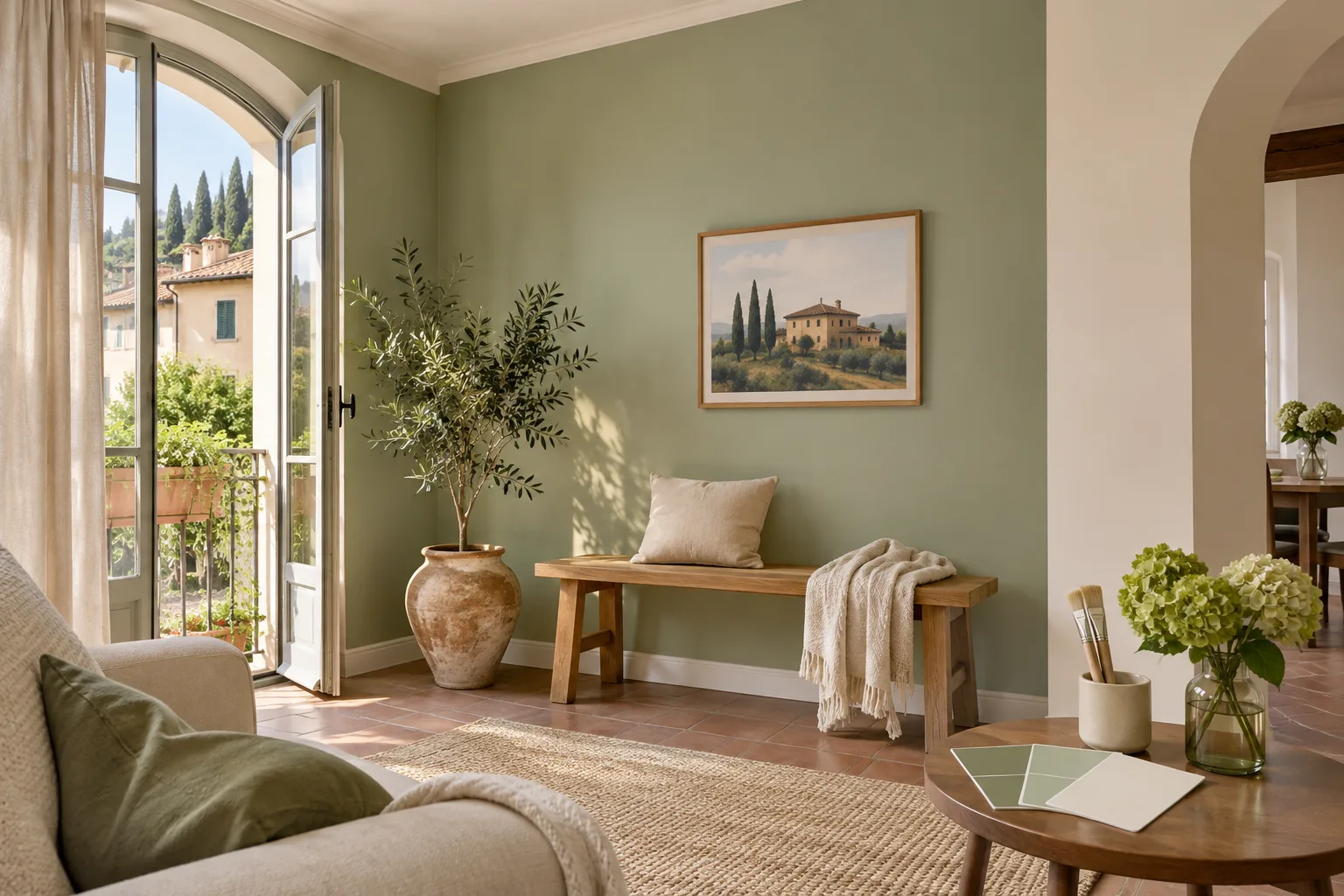
Learn how to observe shadowed areas, test paint with your lamps, and make a room feel clear without losing character. Spend a few minutes in the room at three different times. Record where window light reaches, which areas stay in shadow, and when you switch on a lamp. A room facing a courtyard and one behind a deep balcony can share the same orientation while receiving very different light.
Check the effect of curtains, shutters, tall furniture, and outdoor colours. In Pescara, light reflected by a neighbouring façade can affect the tone of apartment walls. If you can adjust a curtain or move furniture, see what happens first in the area you find too dark.
Decide what you want to see more easily
An entryway should help you find keys and the door, while a living room may need a clearer place to read. Describe how you use the room before deciding on contrast. A colour that works behind a low cabinet can have a different effect across the whole wall of a passage.
Try a pale shade and a more enveloping one in two parts of the same room. See whether the pale option stays lively in shadow and whether the deeper colour keeps the character you expected once the lamps are on. Let what you observe guide the choice.
Review contrast between large and small surfaces
Place the sample near flooring, doors, and furniture. In a hall, see whether contrast makes the opening easier to locate and how strongly it draws attention to the door. In a furnished room, a quiet expanse of wall can give continuity, while an edge of colour can define a transition.
If you are considering a darker wall, test it where it will actually end, near the ceiling, corner, or doorway. View it from the adjoining room. You can then decide whether the boundary feels natural or whether a smaller surface, such as a recess, achieves the effect you want.
Turn the lamps on in their final positions
A ceiling light, table lamp, or floor lamp reaches different parts of a room. Repeat the comparison with your reading light, with the light you use when moving around, and with both together. Watch for reflections too. A surface can look more even from one angle and brighter from another.
If you plan to replace a lamp, mark its position and test with the closest light you have available. Avoid choosing from a photograph taken under different light alone. Keep a physical sample so you can look again if the lighting plan changes.
Review the result in a meaningful spot
When you have a preferred option, use a generous sample on a stretch that includes both light and shadow. Look at the whole room with the furniture that will remain. If a wall looks too flat or the contrast feels too strong, discuss redistributing the colour before moving on to other surfaces.
On the room sheet, note where each colour starts and stops, with its code and finish. Add a photo of the most representative corner and record which lamps were on. At handover, review that same area under normal lighting and see whether the room now meets the needs you identified.
How we prepare the guides: sources and illustrative scenarios