Casa Pescara
Painting · 3 min
Painting a bedroom in a Pescara home
Test bedroom colours from the bed and the doorway, taking account of your lighting, textiles and existing furniture.
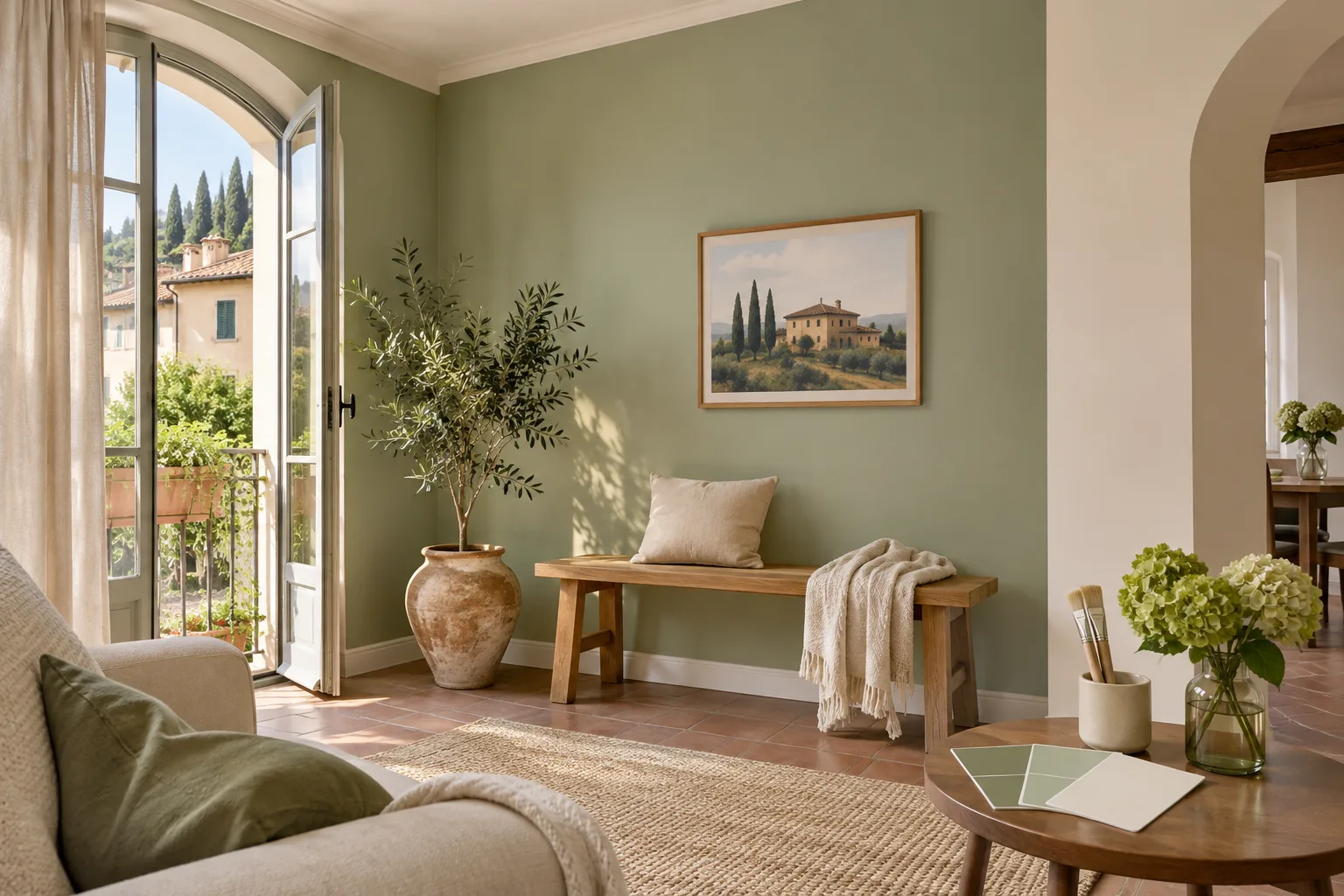
Look at the room when you are actually in it
Pick two times that represent the way you use the bedroom, perhaps first thing in the morning and later with only the bedside lamp on. Put one sample near the bed and another on the wall you see from the doorway. In a Pescara home where shutters or curtains change the daylight, repeat the comparison with them in their usual position. Look up from the bed as well. A colour can feel balanced when you first enter and stronger when it fills your field of view for a longer time. Let your eyes settle before deciding. Write a few words about each sample and which light was on. Your notes will be easier to compare than a set of photographs taken with different automatic camera settings.
Put the sample next to the things that will stay
Bring out the bedspread or pillow cover you use most often. Compare the paint beside the fabric, then move it down to the floor and over to the wardrobe. If curtains are changing, hold their fabric near the glass and against the proposed wall. Decide which parts of the room you want to draw attention to and which will simply sit in the background. A large headboard may leave only a narrow band of a feature wall visible. Trace the furniture outline before deciding where the colour will end. If a mirror reflects that area, judge the view there as well. A paper outline and a movable sample are enough to compare several positions while all the furniture is still in the room. Include the lampshade in the comparison if it gives the wall a coloured glow.
Plan how you will empty and use the room again
Separate furniture you can move from pieces that have to remain. Photograph the existing positions of lights, shelves and pictures you want to put back. Decide which fixings to retain and which holes need attention, including those behind the bed. Ask the decorator about access to the wall beside the wardrobe and protection for the floor, mattress and contents. If you normally sleep in the room, find out when it can be used again and which product instructions apply. Take out clothes and daily essentials in advance so you can reach them during the work. Moving furniture in a different order can give the decorator access to an otherwise blocked corner. Put that sequence on the plan if the room cannot be cleared all at once.
Review the agreed work from your normal viewpoints
Ask the estimate to identify the walls, ceiling, window reveals and spaces behind furniture that are included. If two colours meet beside the headboard or window, mark the approved line on a photo. Keep the sample you checked with the normal room lighting. At handover, look from the doorway and from the place where you sit on the bed. Switch on the lights you used for the original decision. Look at the wall behind the furniture before putting everything back. If you want a detail checked, tell the decorator where you saw it and in which light. Record the paint reference by wall so you can revisit the palette when you replace a curtain or move the headboard.
How we prepare the guides: sources and illustrative scenarios