 Casa Pescara
Roofing · 4 min
Clay roof tiles in Pescara: how to choose the covering
Compare tile profiles, compatibility with the existing roof and edge details before choosing a covering.
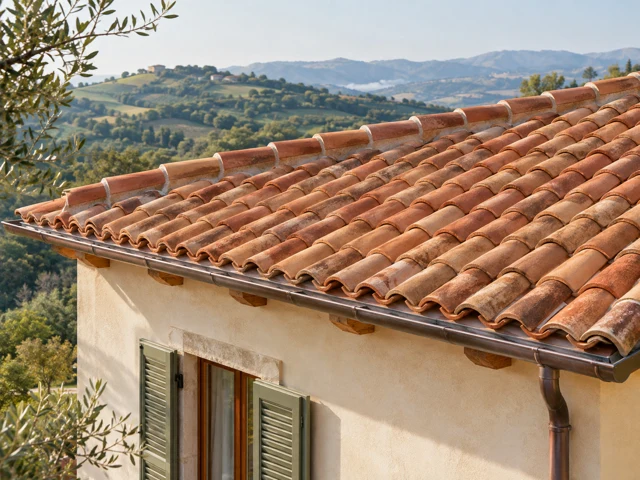
A spare looks like a match in the photograph
Illustrative scenario, not a completed project.
A family in Pescara finds a curved tile left in a cupboard after earlier work. In a photograph its colour matches a proposed replacement. Placed next to the new piece, the old tile has a noticeably different profile. The family wonders whether it came from the front slope or the extension at the back. They ask the fitter to identify the two coverings, leaving roof access to the professionals. Before ordering, they want to know how the tile meets neighbouring pieces and which special parts are needed. The confirmed profile becomes the first selection criterion, with colour to compare afterwards.
Identify the existing covering
A photograph from a distance may show the tile profile, but the person surveying the roof will need to check its dimensions and condition. Curved clay tiles, known in Italian as coppi, can form overlapping rows that carry and cover the path of water in traditional systems. Profiled tiles can use interlocks particular to the model. Ask how the existing product can be identified and which special pieces appear at ridges, edges and junctions. On a Pescara home with several slopes, check whether all areas have the same covering or one was renewed using a different range. Share any photographs of packaging or labelled spare tiles that you already have indoors.
Compare the tile profile with the actual roof
Assess the product against the pitch, support, exposure and fixing system. Ask which limits and details appear in the technical sheet and how they will be checked on the roof. For a repair, have the joint between old and new pieces examined. Similar-looking tiles can interlock differently and stop at different points. If the work covers a whole slope, ask how the new covering will meet the next slope that stays. A drawing of the transition shows which pieces will be disturbed and which will remain in place. Establish whether the project needs a structural assessment of the proposed materials and their effect on the roof.
Compare reuse and replacement with real samples
Tiles from the same slope can be in different condition. Ask how the fitter will identify sound pieces that suit the proposed work. For a partial renewal, compare a group of tiles in daylight. Older tiles can have deposits or changes in appearance, while new ones can vary in colour within the range. Judge the result from the distance where you normally see the roof, such as the yard or street. If some curved tiles will be reused, ask where they will go and how sound spares will be identified. Record which sample is from the old roof and which one represents the new delivery so you can distinguish them later.
Review how the rows terminate
The boundaries of the roof do different jobs from the main area. Ask for details of the eaves, ridge, corners and joins at walls or rooflights. See how water is directed to the outlet and what happens where that route changes. End tiles, flashings and other compatible accessories belong in the schedule alongside the standard tiles. A roof viewed from the ground can look uniform, while a section shows how the covering relates to the layers below. If the fitter expects to retain an existing gutter, ask how the new tile profile will meet its edge. Keep the approved details with the product reference and roof slope location.
Record which product was installed
Before ordering, check that the offer gives the model, format, finish and special components. Ask how quantities were calculated and who checks that delivered packs match the order. If the product changes during the job, establish which checks need repeating before approval. At handover, keep photographs of the main junctions, product sheets and the references on any spare tiles. Leave roof access to the professionals. Pictures collected during the work and a labelled spare can identify what was fitted. If one piece needs attention later, these records give the fitter a practical starting point for assessing a replacement and its compatibility with the surrounding tiles.
Pescara · Distance and local guide coverage ↗
How we prepare the guides: sources and illustrative scenarios