Casa Pescara
Painting · 3 min
Painting walls around a patterned floor in Pescara
A worked example of comparing colours, edges, and changing light before painting a room with a floor you want to keep.
The floor changes colour with the viewpoint
A fictional scenario for illustration, with no reference to an actual project.
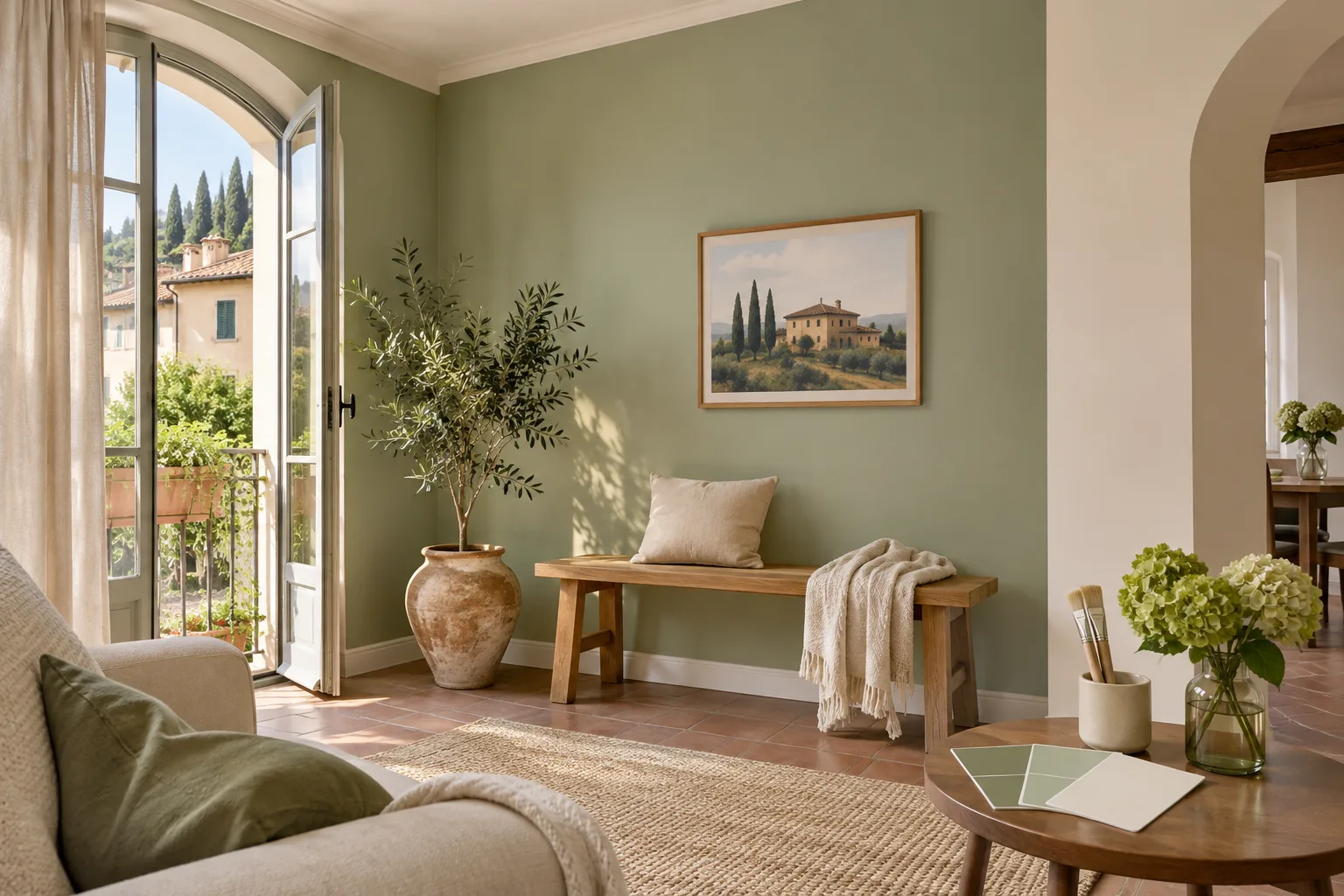
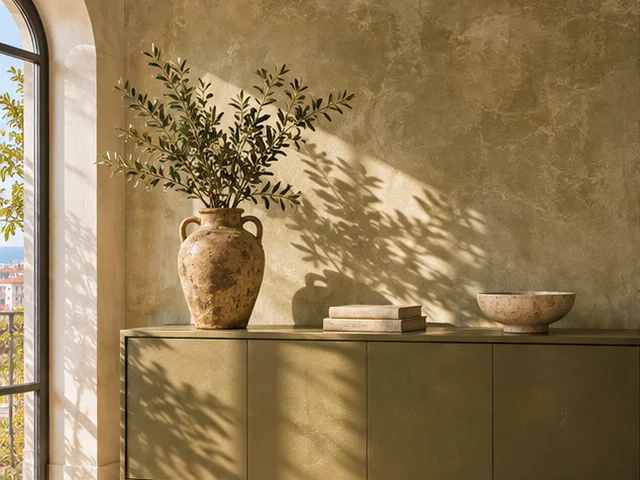
In Serena’s Pescara living room, the floor pattern has warm and cool tones. She wants to keep it and repaint the walls. A grey she liked on the chart looks green near the window, while by the door the floor border supplies most of the colour. Serena sets aside the shop photograph and looks at a dry sample beside the tiles that will stay, with the furniture in its usual places. On a plan she marks where she sees the floor as she enters and where she sees it when sitting. The two views show different parts of the pattern and become the references for her choice.
A connecting colour and a contrasting colour
Serena tries one paint colour that echoes a tone in the tiles and another that creates more contrast between wall and floor. She moves samples along the skirting, near the cabinet, and towards the doorway. With the lamp on, the border looks stronger and its relationship with the curtain changes. She writes brief notes instead of adding more colours to the comparison. She records each sample’s finish too, because a different sheen can change what she sees. She asks the painter whether a larger test is possible where wall, skirting, and floor meet. The choice concerns the room as a whole and how its surfaces work together.
The skirting is the real boundary
At the visit Serena shows the skirting she wants to keep and where it changes material near the door. She asks how the floor will be protected and what preparation is planned for the edge of the wall. Her drawing shows whether the new colour turns into the reveal or stops first. If repairs are needed, she looks at them in side light before choosing how much preparation to include. She asks what kind of floor protection suits the existing surface and who checks it stays in place along the routes. She has the quote list painted surfaces separately from work at edges. A clear boundary makes the decision easy to identify on site.
Look at the sample with furniture in place
Before choosing, Serena sits where she sees the centre of the floor pattern. She asks to view the sample where the cabinet leaves only a strip exposed too. The effect changes when the furniture returns. She photographs both places and records the paint code beside the sample image. On the schedule she asks when the rug and chairs can come back so the result can be checked before they hide surfaces. If the colour continues into another room, she marks where the background changes and looks from both sides of the door. The comparison also helps her decide which furnishings she wants to leave on show.
Repeat the same view at handover
Serena looks at the edge in daylight and with the lamp on. She checks that the retained surfaces are in the agreed condition and records the product code. She returns furniture once her contact confirms it is ready. To choose paint beside a patterned floor, start with a dry sample held by the skirting and a photograph of the floor pattern across the room. Ask how edges will be protected and where the paint stops. At handover, use the viewpoint you see every day. You can then assess the new wall with the floor you chose to keep, using a process you can repeat in a neighbouring room.
Pescara · Distance and local guide coverage ↗
How we prepare the guides: sources and illustrative scenarios