Casa Pescara
Kitchen · 3 min
Setting up a temporary kitchen during renovation in Pescara
Arrange a place for simple meals, dishes and groceries while the kitchen is out of service.
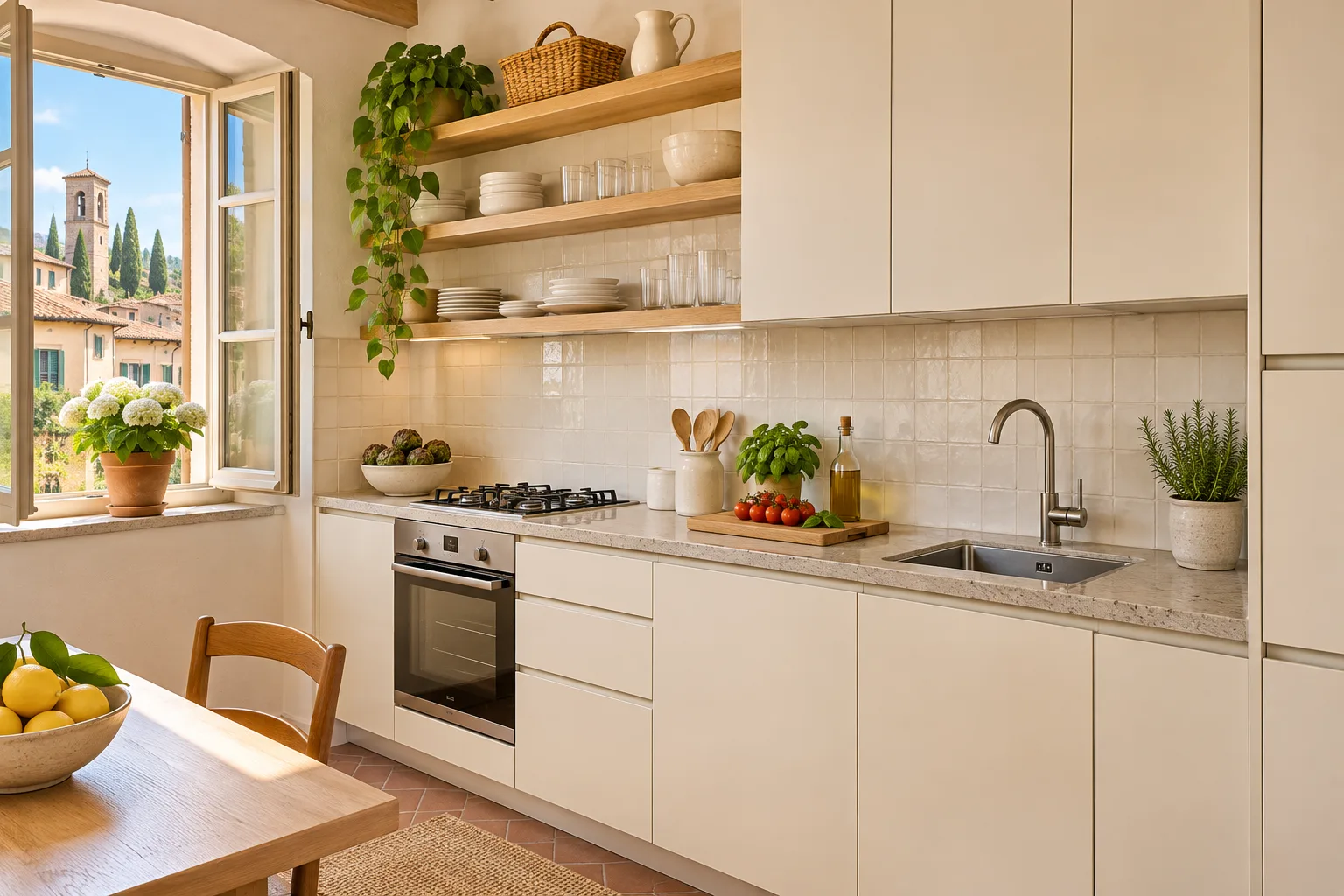
Mark when the sink and cooker will be unavailable
Ask when the sink, fridge and hob will be disconnected and what must happen before each can be used again. The dates can differ. A sink can depend on worktop fitting, while an appliance may be delivered and still need to be connected. Find out which dates are confirmed and which depend on measurements or a material delivery. In a flat in Pescara, identify a temporary area away from the route used for removing old units and bringing in new ones. Check whether you can reach the existing fridge during the work and where food and equipment can go once they have to leave the kitchen.
Plan meals around a few useful tools
Choose meals you can prepare in the space available. Set aside one box for everyday plates, glasses, cutlery, containers and utensils. Think about breakfast and how people who come home at different times will eat. Reduce bulky supplies and keep food according to its storage instructions. If you will use a small appliance, choose a suitable surface and have the power supply and conditions checked where necessary. Follow its instructions on placement, ventilation and clearance from nearby materials. Show everyone where food is stored and which surface should remain clear for preparation. A simple setup is easier to keep usable when several people share a room.
Arrange water, washing up and waste
Decide where you will wash hands and dishes while the kitchen is unavailable. Set aside a stable container for carrying dishes and a place to dry them. Use a route that stays clear of site equipment and building materials. Choose a spot that is easy to clean and keep food separate from cleaning products. If supplies will be interrupted for part of the work, ask when, which rooms are affected and how much notice you will have. Pick a place for food waste and empty it regularly. If there are children or pets, keep their routes away from packs, dust and tools. Agree access with the people doing the work before dismantling starts.
Empty the room in an order that helps you later
Before dismantling, separate items you will use during the work from things you can pack away. Label boxes by purpose or destination, such as everyday plates, parts to reinstall or utensils for the new pantry. Keep fixings, paperwork and small components for retained appliances in labelled containers. Photograph the contents before closing a box if you may need to find something later. Ask which units or appliances must stay accessible until the professionals have disconnected them. A temporary kitchen works better when it is separate from the boxes waiting for fitting and you can reach what you need without crossing the work area.
Move back into the kitchen in stages
Before bringing every box back, check when the new surfaces can be cleaned and used under the material instructions. Confirm that the agreed connection checks are complete and that you know where to find instructions and shut-offs. Bring back everyday items first and try the new layout before filling every cabinet. Keep the temporary setup until the functions you need every day are available. If work remains, ask which part of the room needs to stay clear and for how long. Returning in stages can reveal an awkward opening early and keep the places accessible where somebody may still need to make a touch-up.
How we prepare the guides: sources and illustrative scenarios