Casa Pescara
Kitchen · 3 min
Renewing kitchen doors in Pescara while keeping the worktop
A worked example of checking hinges, end panels, and alignment to decide what can stay and what needs replacing.
The worktop still works for the owners
A fictional scenario for illustration, with no reference to an actual project.
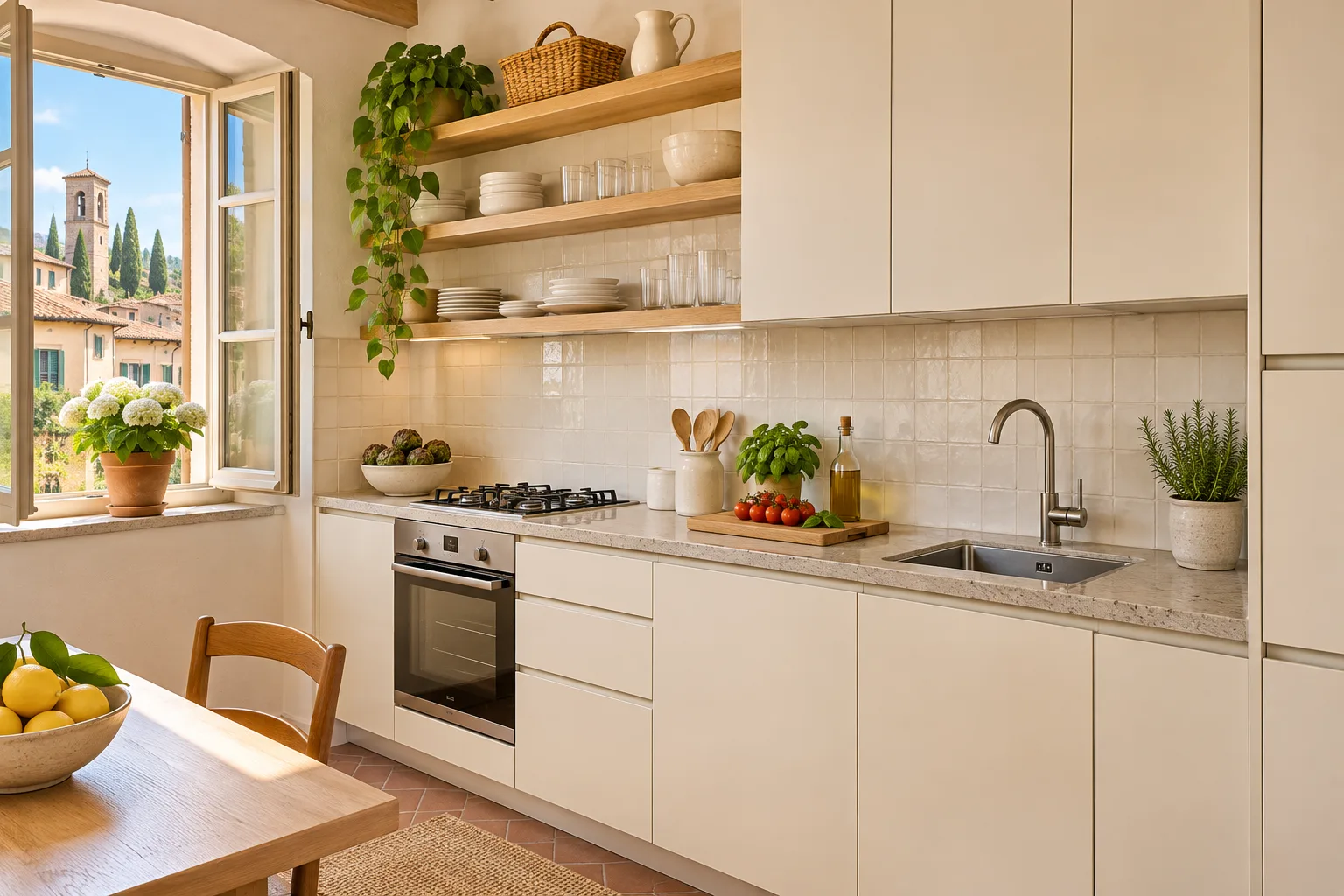
Alessandra and Bruno have a Pescara kitchen with a worktop they still enjoy using and damaged doors near the sink. They want to find out whether they can change the fronts while keeping the worktop and most of the cabinets. Before asking for a proposal they number each door and photograph it open. They flag two drawers that rub, the door next to the oven, and an end panel visible from the living room. The list distinguishes what works, what they want to look different, and what needs checking. From the entrance they realize the end panel can matter as much as the fronts. They mark it on the wide photograph.
One sample door shows the clearance
At the visit they show the accessible hinges and ask who checks the existing cabinets before ordering. The survey looks at widths, fixing positions, and details that affect how the doors move. Alessandra brings the dimensions of a handle she likes. A template shows where a hand needs room near the oven and where a handle might touch the next door. They ask for a sample or drawing of a representative cabinet, with thickness and handle position. They also ask how left- and right-opening doors will be identified on the order sheet. The wrong swing would be hard to spot from colour and width alone.
Compare finishes on the sides too
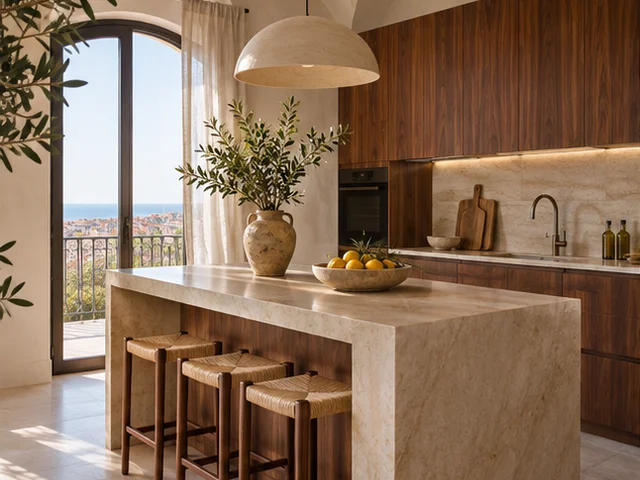
Near the living room, the end panel is visible every day. Bruno holds the sample against the worktop, then moves it towards the plinth and a shelf edge. They ask which surfaces need to change to achieve the effect they want and which can stay. If a new piece is thicker, they want to know what happens at the worktop edge. In one option the panel is treated along with the doors. In another it stays and the colour choice allows for the difference. They view both from the doorway and the table. Their pictures help decide which parts to order and what finishing should appear on the quote.
Remove items without losing their references
Before work the couple agrees who empties the cabinets and where the removed fronts will go. If any parts need to return, they have them marked with the cabinet number. They ask when incoming pieces can be checked and what happens if dimensions differ from the order. They keep using the kitchen until the agreed point. First-day essentials go in a separate box. For the worktop they are keeping, they ask who checks its protection during fitting and when it can come off. In the quote they want to see which adjustments and repairs are included after the fronts have been installed.
Open, close, and inspect the edge
At handover Alessandra and Bruno follow the numbers in their inventory. They open the doors and drawers, look at alignment from the doorway, and check the points by the oven and sink. They confirm that the retained worktop edge is in the agreed condition. They keep the finish reference and handle model. Anyone refreshing a kitchen in the same way can start with a parts list, a photograph with fronts open, and a sample placed against the worktop. The decision becomes clearer when the proposal explains how each unit will be measured, which parts remain, and what can be tested when the kitchen returns to use.
Pescara · Distance and local guide coverage ↗
How we prepare the guides: sources and illustrative scenarios