Casa Pescara
Painting · 3 min
Choosing a wall colour behind a TV in a Pescara living room
A worked example of testing paint beside a screen, lamps, and daylight from the window.
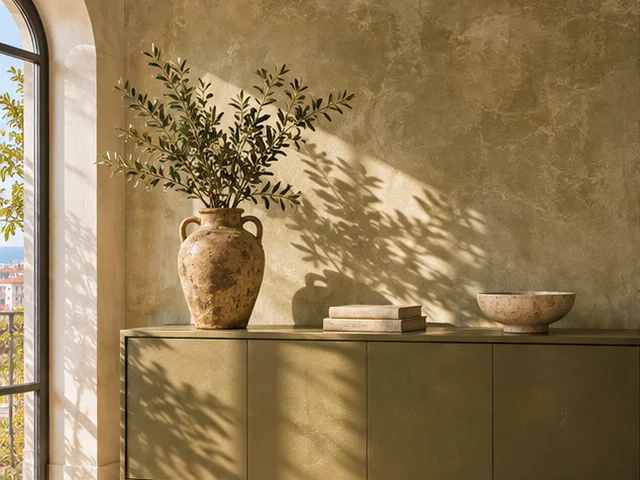
The colour is mainly seen at night
A fictional scenario for illustration, with no reference to an actual project.
In Fabio’s Pescara living room, one wall holds the television and a low cabinet. In daylight Fabio usually sees the room from the entrance. At night he watches the screen from the sofa with one lamp on. He wants a darker colour on the television wall and pale paint on either side. He likes the first sample on a colour card, but beside the screen a lamp reflection draws attention to an edge he had overlooked. He takes a wide photograph and marks where the new colour might stop. To decide, he needs to compare the wall as a backdrop to the screen and as a surface people see when crossing the room.
Three samples in three places
Fabio prepares dry samples and places them beside the screen, near the edge of the wall, and above the cabinet. He leaves space between them and looks at each one on its own. With the television off, he sees how the paint works against a dark screen. Then he turns it on with the lamps in their usual places. He records reflections and which shade makes the cabinet edge easy to read. The test is a way to choose a combination for everyday use. For each sample he notes product and finish. He marks positions on the pictures so he can explain to the painter which test he means and why one corner matters most.
A paint line you see from the doorway too
At the visit Fabio shows where the television wall meets the corner and skirting. He asks where the colour can stop when part of the wall continues towards the passage. A strip of paper lets him try two boundaries. From the sofa he likes both. From the door one appears to cut across the most visible area. He asks whether a larger sample can show what happens under side light and around previous repairs near sockets. He has the quote identify the surfaces to prepare and the edges where the colour changes. The choice takes account of the most noticeable viewpoint when entering as well as the view while watching television.
Plan the time without the screen
For the painting work Fabio asks who will move the cabinet and how the mounted screen will be handled. He shows the cable route and asks when everything can return according to the guidance received. He decides which area will stay clear for a check before the cabinet is filled. He keeps the approved sample and a photograph of the lamp positions because a change could alter the effect he selected. The schedule leaves time to see the bare wall and then see it with the screen and lights on. He can discuss both the wall finish and how it looks once the room is in use again.
A decision that works without repainting every wall
At handover Fabio repeats the test from the doorway and sofa. He compares the sample, checks where the colour stops, and watches reflections with the usual lamp. He records which product was used and where to find the code. For a similar repainting job, choose two viewpoints, test the sample with the screen on and off, and draw the boundary before the site visit. Show which furniture, lamps, and cables will remain. The project becomes more precise when it describes the wall during normal activities and explains how it will be assessed after the furniture is back in place.
Pescara · Distance and local guide coverage ↗
How we prepare the guides: sources and illustrative scenarios