Casa Pescara
Bathroom · 3 min
Planning bathroom mirror lighting in a Pescara home
Check reflections, shadows and controls before choosing a new light for the mirror and vanity area.
Look at what happens on your face
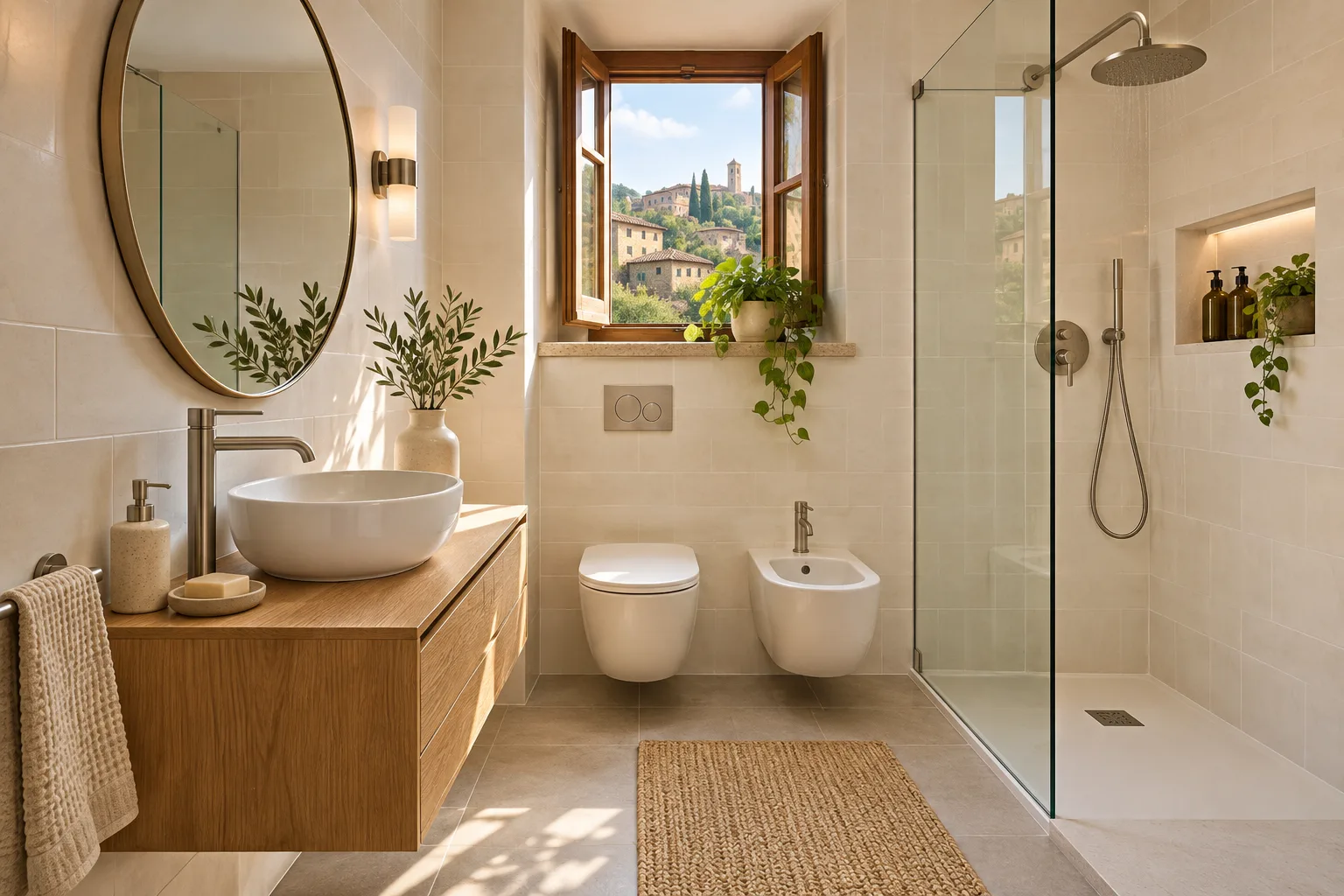
Stand in the position where you normally use the mirror and switch on the existing lighting. Check for shadows around the eyes and chin, then see whether the effect changes when you lean in or move sideways. Ask a taller or shorter member of the household to try the same thing. The room can feel bright while the face is unevenly lit. The light may also be comfortable for handwashing yet distracting during shaving or applying make-up. Write down which activity you are trying to improve and when you normally do it. That gives the electrician a more useful starting point than a request for a brighter bulb.
Mock up the arrangement at full size
Tape a paper outline of the mirror to the wall and mark the top of the basin and the tap. Add the proposed lighting in paper as well. A bar above the mirror and two fittings at the sides each make different demands on the available wall. Look at the mock-up from the doorway and from your normal position at the basin. If the mirror is a cabinet, trace the door movement and check what it passes. Include the side wall and existing switches on your drawing. The full composition will reveal awkward overlaps early enough to change the product or move an element.
Trace the reflections
Watch the mirror as you move from the door towards the basin. Notice whether a ceiling light or a bright window enters the reflection at a particular point. Glossy tiles and the basin may introduce reflections at different heights. Look at the room at the time you normally get ready and again after dark. In a Pescara flat with strong daylight during part of the day, a comfortable morning set-up can feel quite different at night. A photo can help you explain where the problem appears. Use your own experience at the mirror to judge whether the reflection interferes with the task you are trying to do.
Plan how you will switch the lights
Consider which light a visitor needs to find when entering and which light you want for close work at the mirror. Independent switching can be worth discussing if the room is used for different tasks throughout the day. Check whether the proposed switch is within comfortable reach when the bathroom door stands open. If a mirror has an integrated control, learn how that control operates and how you are expected to clean it. Ask a qualified installer to check the proposed equipment and its location in the actual room. Leave the final product order until you have an answer on connection, access and placement.
Record the details the installer needs
Put the mirror and light drawings in one place with a marked photograph of the wall. Show whether the mirror should align with the vanity, the basin or a particular joint in the finish. Ask which measurements must be checked again when the cabinet position is confirmed. During handover, use every switch and test the arrangement at the distance where you normally stand. If something needs adjustment, describe what you see from that position. Keep the model references and care instructions for the fittings. If the light has integrated parts, ask which part can be serviced and how you would identify it later.
How we prepare the guides: sources and illustrative scenarios